
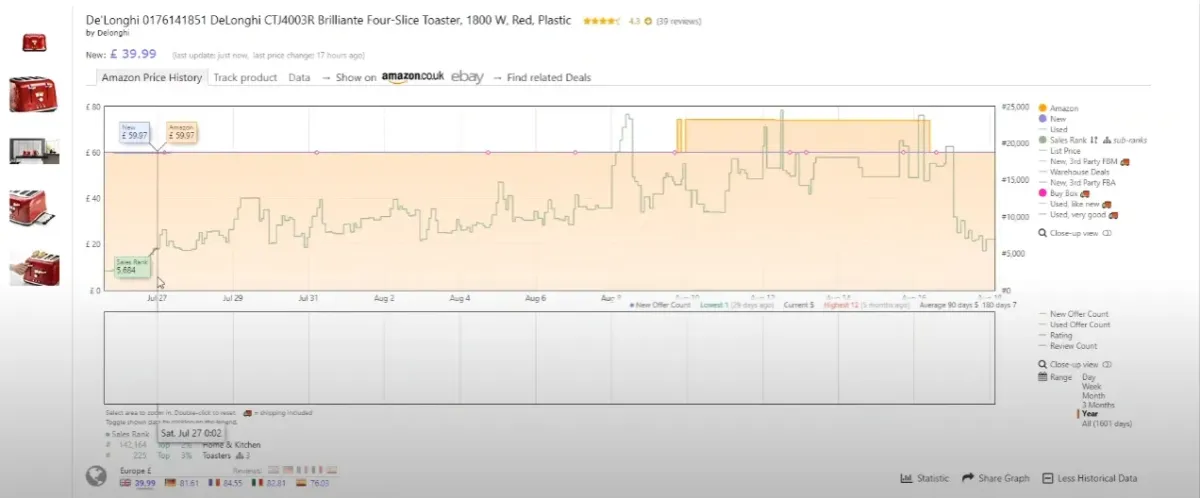
Online Arbitrage means:
buying goods from online marketplaces like Walmart, Target, Home Depot, Costco, or brand websites, and then selling them on Amazon. Profit is made from the price difference between the source website and Amazon after all fees have been taken into account.
Example:
Purchase a product from Walmart for $15
Sell the same product on Amazon for $35
Amazon fees + shipping = $10Net profit = $10 per unit. 
In order to get the most out of Online Arbitrage, it is suggested that you have the following:
Excellent product research skills
Precise cost and profit calculations
Understanding of Amazon policies
Reasons Why Online Arbitrage Is the Choice of Many Sellers:
Online Arbitrage is mainly judicious for its flexibility and low, risk nature.
Major Advantages:
Low startup capital
No need for private branding
Ease of scaling
Quicker cash flow
Availability of branded products in millions
Cons:
Competition can be tough
Price changes
Threat of Amazon limitations
Time-consuming manual research
However, with good research and making smart use of data, one can make a lot of money from Online Arbitrage.
Product Hunting in Online Arbitrage:
Product hunting is the main pillar of Online Arbitrage. Your success rests largely on your product, sourcing skills. For this reason, you need to be good at finding products that are profitable but carry minimal risk.
Best Sources for Online Arbitrage:
Walmart Target Best Buy CVS & Walgreens Home Depot Brand websites Clearance and seasonal sales Step, by, Step Product Hunting Process
Step 1: Find Discounted Products Look for:
Clearance items Rollbacks and flash sales Seasonal discounts Coupon, eligible products Concentrate on those products that have a strong demand on Amazon already.
Step 2: Match the Product on Amazon Make sure: 
Exact match (UPC, model number, size, color)” Same brand and packaging No variation mismatch Incorrect matching
Step 3: Check Amazon Restrictions:
- Before investing, confirm:
- Category approval status
- Brand gating
- Selling eligibility
Product Analysis to Pick a Winning Item:
A winning product is a product capable of generating profits over and over with risks that are kept at a low and manageable level.
Key Metrics to Analyze
1. Sales Rank (BSR):
A BSR less than 100, 000 is generally considered as good
The lower the BSR, the faster the product is sold
Check category, specific BSR standards
2. Buy Box Analysis.
Items that win are usually ones that:
Buy Box price is stable1 to 5 sellers (preferably only 1)No or limited Amazon presenceDo not buy listings where Amazon is the only seller.
3. Profit MarginGoal:
Minimum 2030% ROI At least $5$7 net profit per unitYou should always calculate the profit after:
Amazon referral feesFBA feesPrep and shippingSales tax (if applicable)
4. Price Stability.
You can use tools to find out:
90, day price historyFrequent price dropsSeasonal fluctuationsProducts that have continued stable
6. Listing Quality:
Analyze:
, Product title and bullets
, Image quality
, Variation structure 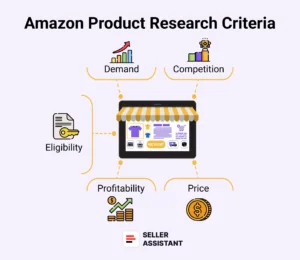
A well, optimized listing will definitely convert better and thus, a higher chance of winning the Buy Box.
Tools Used for Online Arbitrage Analysis:
Professional sellers agree that using tools is a good way to save time and be more accurate.
Some of the most widely used OA tools:
Keepa Track price and sales history
SAS (SellerAmp) Instant check for profit & restrictions
RevSeller Chrome add, on for the fee calculation
Tactical Arbitrage Auto product sourcing
These tools assist in making decisions based on data and hence, can be less risky.
Case Study: Winning Online Arbitrage Product (Example):
Product Type: Branded Kitchen Appliance Buy Price: $22 (Target clearance) Amazon Selling Price: $49.99 Amazon Fees: $14.50 Net Profit: $13.49 ROI: 61%
Why It Worked:
, BSR (Best Seller Rank) under 40, 000
, Only 3 FBA sellers
, No Amazon on listing
, Price stable for 6 months
, Brand is strong and in demand
This is a classic example of a scalable OA product.
Risk Management in Online Arbitrage:

Here are the things you should do to prevent your Amazon account from getting banned:
- , Keep a copy of purchase invoices
- , Buy only from authorized dealers
- , Stay away from used or damaged items
- , Start buying in small quantities
- , Keep an eye on the prices regularly
Taking the right measures in managing risks will definitely lead to your business staying afloat for a long time.
How to Read a Real Keepa Graph:
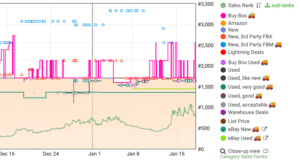
1. Amazon Price Line (Stability Check) In the graph:
The Amazon price stays pretty much steady around $38 $42 There aren’t any steep drops or frequent crash of price.
What This Means: A fair competition No price war Safe for Online Arbitrage Rule: If the price has been stable for 6090 days, its a really good OA signal.
2. Best Sellers Rank (BSR):
Line (Demand Check) Youll see that: The BSR almost always goes up and down within 25, 000 65, 000 range There is a frequent movement up and down .
What This Means: Product is being sold consistently every day The demand is steady Not a product of season only Rule: A zig, zag BSR pattern indicates a regular sales pattern A flat BSR means no sales.
3. Price vs BSR Relationship (Winning Signal):
In a winning Keepa graph: Price remains pretty much the same BSR fluctuates
This confirms that: Buyers are purchasing at this price The price is agreeable to the market High probability of getting the Buy Box
4. Ideal Keepa Criteria for Online Arbitrage:
You can throw this as a callout box in your article:
Winning Keepa Graph Checklist Price stable for 2, 3 months BSR below 100, 000 No sudden price crashes No long flat BSR lines Amazon not owning the listing.
5. How Sellers Use This in Real Life:
Professional OA sellers:
Find discounted product onlineOpen product in AmazonCheck Keepa graph. Confirm: Demand(BSR movement)Profit(price stability)Buy small quantity first. Scale if graph remains healthyPro Tip for Ecomleaner Readers
Don’t ever buy a product without checking Keepa first. One Keepa graph can rescue you from losing thousands of dollars and getting banned from Amazon.