
Product hunting on Amazon means:
the act of searching for products that are in high demand but have low competition and that can bring a high profit margin.
Essentially, a winning product should:
really help people;
have a stable and consistent sales history;
not drop its price;
have competitors that are easy to deal with;
provide at least 25 40% net profit margin.
In this article, we will go through the two most powerful product hunting strategies.
Product Hunting by Reverse Method:
What Is the Reverse Product Hunting Method?
The reverse product hunting method is the act of first finding products that have already been proven and then analyzing the factors of their success. Rather than speculating what product might sell, you study the one which is already selling well on Amazon.
This method works the best for:
newbies;wholesale sellers;online arbitrage sellers;private label sellers who dont want to take risks.
Step-by-Step Reverse Product Hunting Process:
1. Start with Amazon Best Sellers & Categories:
Look through:
Amazon Best SellersMovers & ShakersNew Releases 
Focus on categories such as:
Home & KitchenHealth & HouseholdBeauty & Personal CarePet SuppliesTools & Home Improvement
Avoid:
Electronics (very high returns)
2. Analyze Competitor ListingsOpen top listings and evaluate:
Monthly sales volumeNumber of reviews (preferably under 300)Rating (3.84.4 is ideal)Listing quality (poor images = opportunity)If a product is selling well despite a weak listing, its a strong candidate.
3. Reverse Engineer the Supply ChainOnce you identify a winning product:
Find the brands distributor
Search the product on Alibaba or Google. Check wholesale catalogs. Contact authorized suppliers Doing this you will be able to sell the same or similar product legally and profitably.
Advantages of the Reverse Method:
Less riskDemand is provenScaling is quickerGreat for wholesale & OA
Disadvantages:
Markets are competitive. Differentiation is limitedPrice wars are possibleProduct Hunting by Aggressive Method.
What Is the Aggressive Product Hunting Method?
Aggressive product hunting aims to find hidden, under, served, or emerging opportunities that are at the early stages before they get saturated. Implementation of this method necessitates data analysis, market intuition, and the ability to take risks.
Perfect for:
Experienced sellersPrivate
Step, By, Step Aggressive Product Hunting:
1. Deep Category Exploration:
Don’t limit yourself to the main categories, consider:
Sub, niches Long, tail keywords Seasonal trends
Example:
Instead of just Kitchen Tools, you can dive into activities such as:
Silicone Air Fryer Liners Reusable Baking Mats for Toaster Ovens
2. Keyword, Based Product Discovery:
Leverage tools such as:
Helium 10 Jungle Scout Amazon search suggestions Try to find keywords that have:
3, 000 – 10, 000 monthly searches Great potential but still few listings Certainly are not well branded
3. Spot Market Gaps:
Look through the product listings and figure out if there are:
Poor photography .
Deep Product Analysis with Keepa:
What Is Keepa?
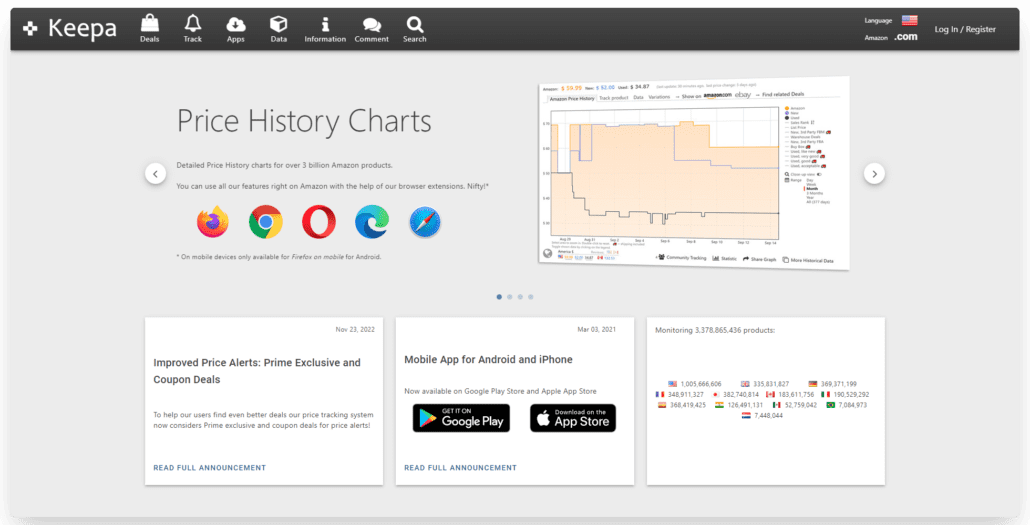
Keepa is one of Amazons most powerful data analysis tools. It provides historical information about price, sales rank, and stock. This tool helps sellers to back their decisions with real data instead of guesswork.
Main Keepa Metrics To Analyze:
1. Sales Rank History:
constant downward spikes = very good sales
horizontal rank = low demand
seasonal spikes = seasonal product
Rule: Daily rank drops are indicative of a steady sales rhythm.
2. Price History:
Look:
average selling price,
price stability,
price wars,
Do not buy a product if:
Price is lowered very often
Buy Box changes very often
Stable prices = good market.
3. Amazon In, Stock / Out, of, Stock:
Continuous Amazon presence = strong competition,
Amazon stock, outs = a window of opportunity.
4. Offer Count History:
Unchanging offers = good competition,
Number of sellers grows hugely = the risk of market saturation.
5. Buy Box Ownership:
Find out:
Who controls Buy Box
Rotation patterns
FBA vs FBM dominance
If the Buy Box switches among FBA sellers regularly, its a positive sign.
Pick a Winning Product with Keepa
The winning product nearly always has:
Regular rank pretty drops
Unchanged price trend
Seller count under control
Little Amazon takeover
Sales all year round
Reverse vs Aggressive Method – Which Is Better?
| Feature | Reverse Method | Aggressive Method |
|---|---|---|
| Risk Level | Low | Medium–High |
| Capital | Low–Medium | Medium–High |
| Profit Margins | Moderate | High |
| Brand Control | Limited | Full |
| Best For | Beginners & Wholesale | Advanced & Private Label |
Case Study Overview:
Marketplace: Amazon USA
- Business Model: Wholesale transitioning to Private Label
- Category: Home & Kitchen
- Target Product: Silicone Air Fryer Liners

- Initial Capital: $2, 500
- Goal: Find a low, risk product with the ability to scale
Phase 1: Reverse Product Hunting (Validation Stage):
Step 1: Finding a Proven Product:
The procedure was initiated by navigating through Amazon Best Sellers Home & Kitchen Kitchen Tools. One product, Silicone Air Fryer Liners, caught the eye of the researchers.
Initial observations:
Several sellers consistently making sales Average price: $9.99$14.99 Reviews: 180350 Bad image quality and weak branding That meant high demand and a good potential for improvements.
Step 2: Listing Analysis:
A seller tool was used to collect the data shown below: Estimated Monthly Sales: 700-900 units BSR Range: 1, 2002,- 500 (Kitchen) FBA Sellers: 69 Amazon Retail: Not selling Key Opportunity: Despite the average images and weak copy, the listings were ranking well, which means that it was the demand that was driving the sales.
Step 3: Supplier & Cost Validation:
Conclusively, reverse sourcing yielded the following: The very product was found on Alibaba Price of manufacturing: $1.40 each Custom package: $0.30 (Sea) Shipping: $0.50 per item Full landed cost: about $2.20 each Selling price: $12.99 Estimated net profit: $4.50$5 per item.
Phase 2: Aggressive Product Hunting (Opportunity Expansion)
Step 4: Identifying Market Gaps:
Negative reviews of the competing products revealed:
Liners slipping inside of the basket. Heat deformation. No size optionsNo cleaning accessoriesThis allowed product differentiation.
Step 5: Aggressive Improvements:
The main points of the aggressive improvement strategy were:
Thicker, heat, resistant siliconeAnti, slip textureTwo size variants (small & large)Free silicone cleaning brushPremium box packagingThe product was then positioned as a premium solution, not just another liner.
Step 6: Keyword & Niche Validation:
Here is the summary of the keyword research:
Air fryer liner silicone 22, 000 searches/month. Reusable air fryer liners 9, 800 searches/month. Long, tail keywords with low competition. It was clear that there was a strong potential for organic ranking.
Phase 3: Deep Product Analysis with Keepa:
Step 7: Sales Rank Analysis:
Keepa showed:
Daily rank drops (sales were regular)No long flat lines (no dead periods). Strong sales during holidays and normal months. It is a product that is in demand all year round.
Step 8: Price Stability Check:
The average price remained between $11.99–$14.99
Final Thoughts:
This case study demonstrates that finding successful Amazon products is more about having a system than just luck. Sellers can always discover profitable ideas even in competitive markets such as Amazon USA by using the three methods of Reversed Product Hunting, Aggressive Innovation, and Deep Keepa Analysis, together.