
Amazon PPC (Pay, Per, Click):
is a great weapon in the advertising arsenal that sellers on Amazon can use to ramp up their product’s exposure, sale, and brand recognition. Considering the fact that countless items are competing to grab buyers’ attention it is a must nowadays to do more than just list a product. PPC on Amazon helps sellers to market their goods to buyers who are ready and willing to make a purchase.
This comprehensive post from Ecomleaner covers everything about PPC on Amazon, what it is, how it works, the different types of campaigns, advantages, costs, and some handy tips to get the most out of your ad spend.
What Is Amazon PPC? 
Amazon PPC is a type of advertising in which the seller only pays Amazon for the times the ad is clicked by a computer user. Ads are positioned on highly visible spots like first, page search results, product detail pages, or the listings of a competing product.
Let us assume a user enters the phrase wireless earbuds in the Amazon search bar. The resulting page will have a few spots reserved for sponsored products right at the top. If the user presses your ad, you give Amazon a share of your bid this is where the name Pay, Per, Click comes from.
Seller Central or Vendor Central interfaces are used for managing Amazon PPC and it is essentially a market, driven system, i.e., an auction, where ads vie for the attention of users within a limited page space.
Amazon PPC is a straightforward concept that can be explained in three simple steps.
Firstly, Keyword Targeting:
The sellers are free to choose the keywords or product targets that are relevant to their product. These are basically the terms that the customers enter into the search bar on Amazon.
Secondly, Bidding System:
The sellers place their bids for the keywords. The bid shows the maximum amount that the seller is willing to pay for each click.
Lastly, Ad Auction & Display:
When a shopper searches for a keyword, Amazon holds an auction to decide which ad should be shown and it takes into account:
Bid amount, Relevance of the productListing quality and performance. The winning ads are displayed in the sponsored placements. You are only charged when someone clicks on your ad, not when it is shown.
Types of Amazon PPC Ads:
Amazon gives.
1. Sponsored Products:
are the most popular and widely used Amazon PPC ads.
Where they appear:
Top of search resultMiddle or bottom of the search resultsProduct detail pagesBest for:
-
Driving direct sales
-
Promoting individual listings
Atomatic targetingManual targeting (keyword or product targeting)
2. Sponsored Brands:
Sponsored Brands ads display your brand logo, headline, and several products.
Where they appear: 
Top of search results Best for:
Brand awareness Sellers with Brand Registry Driving traffic to Brand Store These ads enable customers to identify and have confidence in your brand.
3. Sponsored Display:
Sponsored Display ads provide sellers with options to retarget shoppers who viewed their products or even target competitor listings.
Where they appear:
Product detail pages Off, Amazon websites Best for:
Retargeting Increasing repeat purchases Defensive and competitive advertising.
Automatic vs Manual Campaigns:
Automatic Campaign:
Amazon selects keywords and placements game based entirely on your product listing.
Pros:
Easy to set up.
for keyword research.
Allows beginners to get started easily. 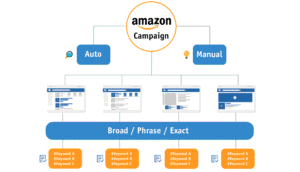
Cons:
Less control.
Could potentially include irrelevant keywords.
Manual Campaigns:
Sellers choose the keywords and bids themselves.
Pros:
Complete control
Higher profitability,
better optimization.
Cons:
Needs knowledge and analysis.
One clever tactic is to begin with automatic campaigns, identify the profitable keywords to be extracted, and finally transfer them into manual campaigns.
Understanding the most important Amazon PPC metrics.
Here are some of the important metrics to know when running Amazon PPC campaigns:
Impressions:
How many times your advertisement is displayed.
Clicks:
How many times customer clicks your ad?
CTR (Click, Through Rate):
Clicks Impressions
CPC (Cost Per Click):
Payable amount for each click.
Conversions:
The amount of transactions made.
ACoS (Advertising Cost of Sale): 
Ad Spend Sales
ROAS (Return on Ad Spend):
Sales Ad Spend: A lower ACoS and a higher ROAS mean that your ads are profitable
.
Main advantages of Amazon PPC:
There are many reasons why Amazon PPC is a great tool to use for any seller looking to grow their business:
Immediately increases product visibility.
Brings highly targeted traffic with strong buying intent.
Improves organic ranking through increased sales.
Assists in launching products.
Enhances brand awarenessEnables data, driven decision makingAmazons PPC is usually the quickest way for new sellers to get their first sales.
The price of Amazon PPC does not have a fixed price:
The price depends on: 
- Keyword popularity
- Product category
- Bid value,
- Campaign management.
Generally, the average cost per click (CPC) is from $0.20 to $2.00, however, highly competitive niches can cost more.
Some of the ways sellers can control their spending include:
Setting the daily budgetSetting the bid price limitCampaign calendar.
Amazon PPC Best Practices:
Amazon PPC can be a great way to grow your brand, but only if you implement the right practices. Here are some that will help you run successful PPC campaigns on Amazon:
Get your product listings up to scratch before you start advertising Find the keywords that convert the most and use them Keep branded and non, branded keywords separate Keep on adding negative keywords as a regular activity Keep an eye on ACoS and change bids accordingly Stop keywords that don’t bring any sales Experiment with different match types (Broad, Phrase, Exact) Slowly increase the budget of your winning campaigns Long, term success is all about the right balance between consistency and optimization. Common Amazon PPC Mistakes to Avoid: Running ads on listings that don’t have good quality, not looking at the search term reports, only using automatic campaigns, and setting bids.