
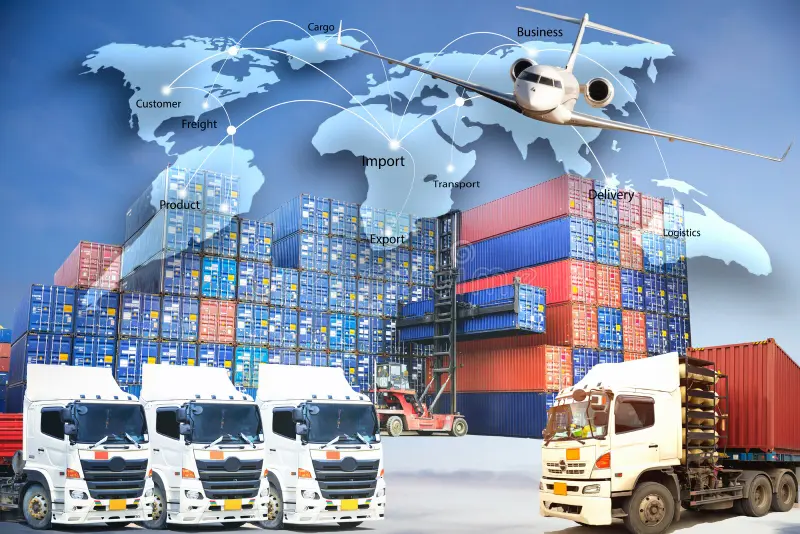
What Is Logistics and Freight Forwarding in E-Commerce?
As e, commerce continues to boom, product delivery (on time and in good order) is becoming just as crucial as the sales of the products themselves. What you don’t see is that beneath every successful internet shop, there’s a highly efficient logistics and freight forwarding system. These two aspects essentially facilitate the handling of inventory, transportation, customs clearance, and final deliveries. For anyone selling on e, commerce platforms, especially in the case of Amazon FBA, private label, wholesale or cross, border selling, being conversant with logistics and freight forwarding is a must.
This piece is a comprehensive guide to logistics and freight forwarding in the e, commerce industry. We explain their significance, processes, types, pros, cons, and how to do it right. 
What Does Logistics Mean in Online Shopping?
Logistics in online shopping basically includes all the stages of working out, running, and controlling the smooth delivery of products from the suppliers or producers to the buyer at the door. Besides, it covers storage, delivery, order processing fulfillment, and handling the returned goods.
Main Ingredients
Inventory Management:
Making sure that the right products are readily available in the required quantity at the right time. Frustrating stockouts or unwanted excess inventory, which in either case affect profitability, are the consequences of poor inventory management.
Warehousing and Storage:
Wherever the products are kept: the company’s warehouse, the fulfillment center, or even the third, party logistics (3PL) providers. For Amazon merchants, the term is inclusive of Amazon FBA facilities.
Order Processing:
When the consumer confirms his/her desire to buy the goods, the system selects, packs, and gets the goods ready for shipment.
Transportation and Delivery:
Transferring goods from storage facilities to customers using couriers, postal services, or freight carriers.
Returns and Reverse Logistics:
Handling of customer returns, refunds, replacements, and restocking.
What Is Freight Forwarding in E, Commerce?
Freight forwarding refers to the provision of an expert service that is responsible for the movement of goods across borders. The freight forwarder in such scenarios is the one who intermediates between various parties such as the seller on one end and different means of transportation like shipping lines, airlines, trucking companies, and customs authorities on the other.
When it comes to e, commerce sellers who buy their products from foreign countries, especially from China, Vietnam, or Turkey, freight forwarding becomes a non, negotiable part of their business.
Role of a Freight Forwarder:
A freight forwarder takes care of the following tasks:
- Finding and reserving cargo space
- Discussing and settling freight costs
- Drafting and issuing shipping documents
- Overseeing customs clearance
- operationsArranging international and domestic transportation
- Dealing with the insurance and regulatory requirements
1. Air Freight:
Fastest method for shippingPerfect small, high, value or immediate goodsCosts more than other methods
2. Sea Freight:
The most affordable option for large and heavy shipmentsShipment take time (2045 days)Used private label and bulk imports
3. Rail Freight:
Common for shipments from China to EuropeAverage expenses and time for delivery
4. Road Freight:
Typically for domestic or regional transportMost occasions, it is mixed with sea or air freight
1. Faster Delivery and Customer Satisfaction:
Effective logistics means on, time delivery that results in customer feedback and brand image.
2. Cost Reduction;
Good freight planning leads to lower shipping, storage, and handling costs and higher.
3. Global Market Access:
Freight forwarding facilitates sellers to get products from different countries and sell globally.
4. Inventory Control: 
Precise logistic systems are of great help in avoiding excess or shortage of products.
5. Scalability:
With a robust logistics network, an e, commerce company can expand without losing control of operations.
Amazon FBA Logistics and Freight Forwarding:
Logistics and freight forwarding are very critical to Amazon vendors.
Typical Amazon FBA Shipping Process:
- Supplier makes the product
- Freight forwarder collects goods
- Customs clearance
- the originInternational shipping (air or sea)Customs clearance .
- he destinationDelivery to Amazon FBA warehouse
Amazon FBA eases last, mile delivery, but the sellers still require a professional freight forwarder to ship internationally.
Logistics and Freight Forwarding in an E, Commerce Environment: Problems:
Shipping costs that have been increasing:
, The increase in freight rates is due to rising fuel prices, disruptions at the global level, and congestion at the ports.
Customs and regulatory issues:
, Delays, penalties, or seizure of the cargo could result from uncontrolled documentation.
Delivery delays: 
, The timelines could be impacted by weather conditions, workers strikes, or political issues.
Returns;
, Return handling is still a big problem for online vendors.
Input and Output chain disruptions:
, Manufacturing and transportation could be interrupted by global events.
How to Select an Appropriate Freight Partner?
Here are several factors you should weigh up according to your e, commerce business when choosing a freight forwarder:
- Knowledge of e, commerce and Amazon FBAClear price
- disclosureCustoms clearance
- proficiencyShipment Tracking and communicationExtensive
- worldwide networkGood reviews
- referralsIt is a trusted freight forwarder who functions more like a logistics partner than a mere supplier of services.
Best Practices for E, Commerce Logistics Success:
- Implement inventory forecasting
- softwareCollaborate with proficient 3PL providers
- Pack smartly to cut down on shipping costs
- Get insurance for valuable shipmentsUse real,
- time shipment trackingStay compliant with import/export
- regulationsWhat Lies Ahead for Logistics and Freight Forwarding in E, Commerce.
Conclusion:
The success of e, commerce largely depends on logistics and freight forwarding as they are the main pillars.More specifically, these systems span the entire process of globally sourcing products and locally delivering orders; thus, they ensure a seamless flow of operations, customer satisfaction, and business expansion. Therefore, if you are an Amazon seller, a private label, or an online retailer, you ought to recognize the tremendous impact that logistics and freight forwarding have on raising your profits and growth over time For e, commerce platforms such as Ecomleaner it is a question of survival to understand logistics and freight forwarding and to help sellers learn about these matters if they wish to build a successful business ecosystem online.